
MOTS-c 10mg – mitochondrial peptide (fat burner) MOTS-c is a short mitochondrial-derived peptide (MDP) made up of 16 amino acids and produced directly inside mitochondria. It takes part in the regulation of cellular energy processes — affecting glucose uptake, insulin sensitivity, the body’s stress response, and general metabolic tone. After synthesis, MOTS-c can move into the cell nucleus, where it influences the expression of genes tied to mitochondrial function and metabolic pathways. That mechanism becomes especially active during metabolic disorders or periods of heightened stress. Research shows that MOTS-c improves endurance, helps bring body weight down, lowers insulin resistance, and improves a range of age-related conditions — osteoporosis included. Thanks to its layered effect on metabolic processes, the peptide is being studied as a possible tool for supporting longevity. What is MOTS-c MOTS-c belongs to a group of mitochondria-encoded peptides that have only recently come under proper investigation. For a long time, MDPs were thought to work only inside mitochondria. But recent studies confirm their action outside the cell too. MOTS-c has been detected both in cell nuclei and in the circulation, which puts it in the category of hormone-like molecules with systemic effects. Interest in MOTS-c has grown considerably over the past few years, with several studies pointing to its role in regulating body weight, metabolism and physical condition — and to a possible link with longevity mechanisms. One of the first areas where MOTS-c effects were most visible was carbohydrate metabolism. Based on available data, the peptide improves glucose tolerance and may serve as a useful adjunct in correcting diabetes-related disorders. A scientific study published in Cell Metabolism reported improvements in physical performance and muscle function among participants receiving MOTS-c. The journal Nature Communications flagged improvements in cognitive performance and sleep with peptide use. Taken together, the accumulated data position MOTS-c as a biological signalling molecule capable of reducing chronic inflammation and slowing a number of age-related processes. Positive Effects of MOTS-c MOTS-c is a developed peptide drug with a wide and promising range of potential benefits: Deep regulation of systemic metabolism and tuning of metabolic processes at the cellular level. Better glucose tolerance — of high clinical value for both treatment and prevention of diabetes mellitus. Stimulation of anabolic processes and a measurable lift in muscle mass. Significant growth in physical endurance and performance. Reduction in chronic inflammatory processes and a general strengthening of the immune system. Improvements in key parameters of night sleep quality. A moderate boost in cognitive function — memory and concentration included. A positive effect on the cardiovascular system and a drop in general cardiac risk. Higher sensitivity of peripheral tissues to insulin. Effective protection against the development of metabolic syndrome. Improved functional activity and efficiency of mitochondria. Reduced risk of age-associated diseases and support for healthy ageing strategies. On top of that, MOTS-c raises the body’s resistance to various stress factors. Confirmed Research Data Although MOTS-c is a relatively new subject of scientific interest, a significant number of clinical and preclinical studies are currently being conducted to assess its effectiveness across different pathological conditions: An early experiment on a standard strain of laboratory mice clearly showed that the MOTS-c-treated group had significant improvements in metabolic parameters and a drop in inflammation versus the control group. A clinical study of human volunteers published in Nature Communications, in which participants took the peptide for five days, found significant improvements in cognitive performance and sleep quality. A specialised study focused on professional athletes, published in Cell Metabolism, demonstrated that a course of MOTS-c at a dose of 10 mg produced objective improvements in neuromuscular function and raised physical endurance. No less compelling was experimental work on a genetically modified mouse model of diabetes, also described in Cell Metabolism. It showed that administration of MOTS-c at a dose of 10 mg improved glycaemic regulation and promoted progressive weight loss — pointing to potential use in diabetes and weight-management programmes. Potential Side Effects To date, no serious side effects have been reported from MOTS-c. However, as with any biologically active substance, individual reactions are possible — especially if recommended dosages are exceeded. In rare cases, studies reported headache, mild nausea and stomach discomfort. MOTS-c is considered safe and well-tolerated at recommended doses. Why choose MOTS-c OxyPharma For MOTS-c with high purity and consistent quality, products from OxyPharma are among the best options on the market. The lab-produced peptides offered here have a proven purity above 99%. The product is intended strictly for laboratory research and personal monitoring. It is not a medicinal product and is not intended to diagnose, treat, cure, or prevent disease. Protocol for using MOTS-c To get a visible effect in body-weight correction and metabolic parameters, a sample monthly course might run as follows: Fat burning + insulin sensitivity – dosage 5 mg, 2 injections per week, course duration 3-4 weeks Maximum metabolic effect – dosage 5-10 mg, 3 injections per week, course duration 3-4 weeks Anti-ageing – dosage 5 mg, 1 time per week, course duration 4-6 weeks (periodically) Recommendations for use MOTS-c injections are recommended subcutaneously in the abdominal area. That gives even absorption and keeps discomfort to a minimum. The drug should be stored in the refrigerator at a temperature of +2 to +8 °C. Stick to the recommended frequency of injections — no more than once every 5 days. More frequent use can lead to decreased receptor sensitivity or a higher risk of adverse reactions. To reinforce the effect of MOTS-c, it is sensible to pair it with: regular physical activity; a diet with a moderate calorie deficit; nutrients that support mitochondrial function (coenzyme Q10, alpha-lipoic acid, magnesium). An integrated strategy of this kind not only strengthens the effect of the peptide but helps consolidate results at the level of wider metabolic health. The product is intended for in vitro research use only. The information presented has been gathered, systematised and analysed from the results of numerous independent studies conducted over recent years. It is not intended to treat, prevent, or monitor any human disease. Results are individual and may vary with health status, genetic characteristics and lifestyle. Peptides, MOTS-c OXY-MOTS (10 mg) OxyPharma
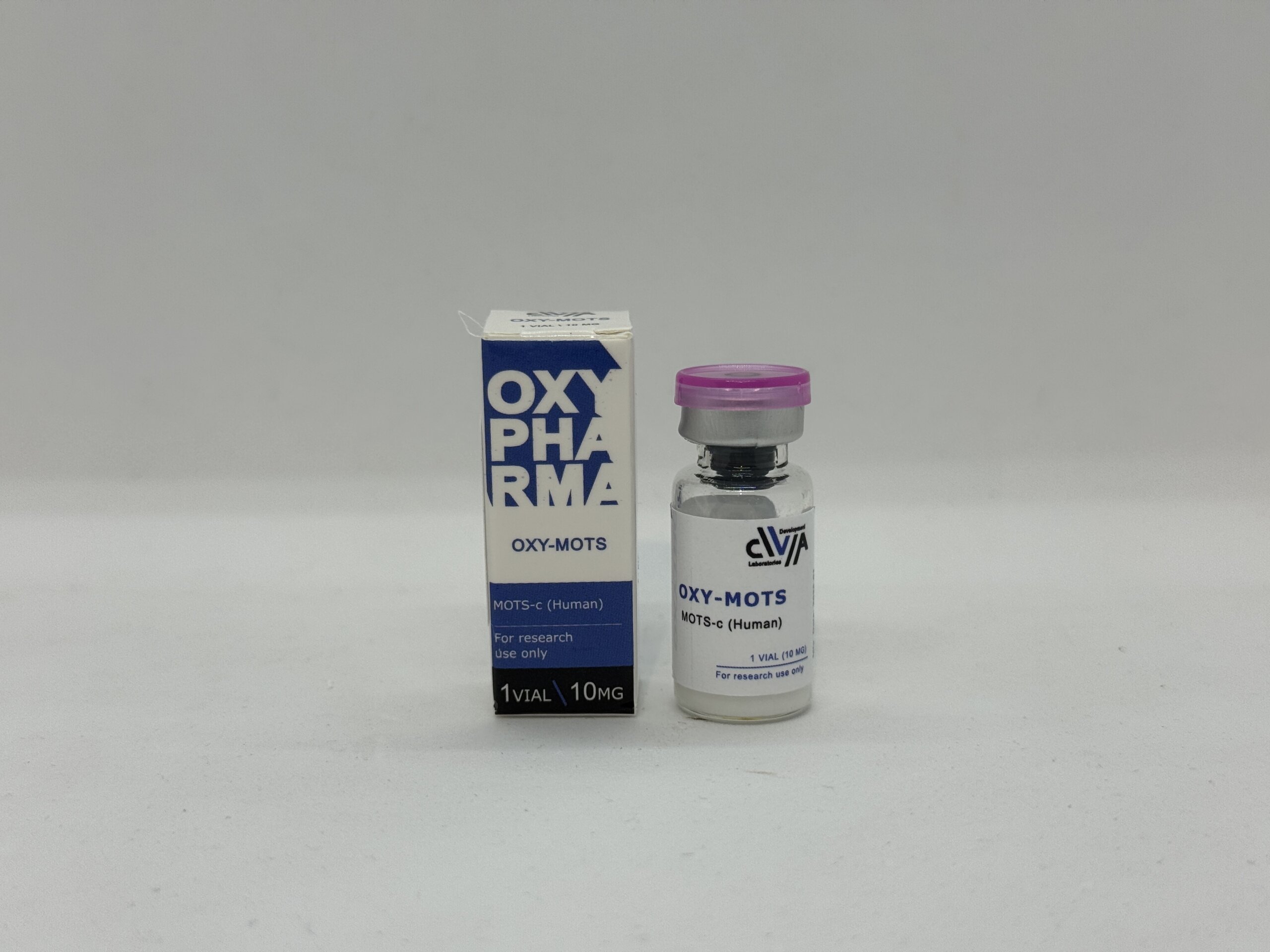
Peptide MOTS-c OXY-MOTS (10mg) OxyPharma
€0.00
MOTS-c 10mg — a mitochondrial peptide with a lipolytic edge (fat burner)
MOTS-c is a short mitochondrial-derived peptide (MDP), 16 amino acids long, produced directly inside the mitochondria. It takes part in the regulation of cellular energy processes — glucose uptake, insulin sensitivity, the body’s stress response and overall metabolic tone all sit under its influence. After synthesis, MOTS-c can migrate into the cell nucleus, where it shapes the expression of genes tied to mitochondrial function and metabolic pathways. The mechanism is particularly active during metabolic strain or heightened stress.
Research indicates that MOTS-c improves endurance, assists weight reduction, lowers insulin resistance and alleviates a number of age-related conditions, osteoporosis among them. Thanks to its layered effect on metabolic processes, the peptide is examined as a possible tool for extending healthspan.
What MOTS-c actually is
MOTS-c belongs to a group of mitochondria-encoded peptides that have been under study for only a relatively short period. Earlier it was believed that MDPs functioned only inside mitochondria — but recent findings have confirmed their action outside the cell. MOTS-c is found in cell nuclei and in circulation, which effectively makes it a hormone-like molecule with systemic reach.
Interest in MOTS-c has risen sharply over the past few years. Several studies have highlighted its involvement in the regulation of body weight, metabolism and physical state, together with a potential link to longevity mechanisms. One of the first domains in which the effect became clear was carbohydrate metabolism. Available data suggest the peptide improves glucose tolerance and may serve as a useful adjunct for correcting diabetes-related disorders.
A scientific publication in Cell Metabolism noted improvements in physical performance and muscle function in participants receiving MOTS-c. Nature Communications reported better cognitive performance and sleep quality with the peptide. The data accumulated so far positions MOTS-c as a biological signalling molecule capable of lowering chronic inflammation and slowing a number of ageing processes.
Positive effects of MOTS-c
MOTS-c is a modern peptide drug with a wide and promising range of benefits:
deep regulation of systemic metabolism and optimisation of metabolic processes at the cellular level;
improved glucose tolerance — carrying high clinical value for the prevention and treatment of diabetes mellitus;
stimulation of anabolic processes and a measurable rise in muscle mass;
substantial increase in physical endurance and output;
reduction in chronic inflammatory processes alongside overall immune support;
better parameters for night-sleep quality;
moderate enhancement of cognitive function, including memory and concentration;
a positive effect on the cardiovascular system and a lower overall disease risk;
higher sensitivity of peripheral tissue to insulin;
effective protection against the emergence of metabolic syndrome;
sharper functional activity and efficiency of the mitochondria themselves;
lower risk of age-associated diseases, with support for healthy ageing strategies.
MOTS-c also raises the body’s resistance to a range of stress factors.
Confirmed research data
Although MOTS-c is a relatively new focus of scientific attention, a substantial number of clinical and preclinical studies are already underway to assess its effectiveness across different pathological states:
One of the initial experiments, carried out on a standard strain of laboratory mice, clearly showed that animals treated with MOTS-c had meaningful improvements in metabolic parameters and lower inflammation levels compared with controls.
A clinical study of human volunteers published in Nature Communications, in which participants took the peptide for five days, found significant gains in cognitive performance along with improvements in sleep quality.
A specialised study on professional athletes published in Cell Metabolism convincingly demonstrated that a course of MOTS-c at a dose of 10 mg produced measurable gains in neuromuscular function and physical endurance.
No less interesting was an experimental study on a genetically modified mouse model of diabetes, also detailed in Cell Metabolism. It showed that administration of MOTS-c at a dose of 10 mg improved glycaemic regulation and promoted progressive weight reduction — pointing to potential in diabetes and weight-management programmes.
Potential side effects
No serious side effects have been reported from MOTS-c to date. Even so, as with any biologically active substance, individual reactions remain possible — particularly when recommended doses are exceeded. In a small number of studies, headache, mild nausea and stomach discomfort have been reported.
MOTS-c is considered safe and well tolerated when used as recommended.
Why pick MOTS-c OxyPharma
For anyone looking for MOTS-c with high purity and consistent quality, OxyPharma’s product is one of the stronger choices on the market. The peptides are laboratory-produced, with proven purity above 99%. The product is intended solely for laboratory research and personal monitoring. It is not a drug and is not intended to diagnose, treat, cure or prevent disease.
Protocol for using MOTS-c
To see a pronounced effect in body-weight correction and metabolic improvement, a monthly course example runs as follows:
Fat burning + insulin sensitivity — dosage 5 mg, 2 injections per week, course duration 3-4 weeks
Maximum metabolic effect — dosage 5-10 mg, 3 injections per week, course duration 3-4 weeks
Anti-ageing — dosage 5 mg, 1 time per week, course duration 4-6 weeks (periodically)
Recommendations for use
MOTS-c injections are best administered subcutaneously in the abdominal area. This gives even absorption and keeps discomfort to a minimum. The compound should be stored in the refrigerator at a temperature of +2 to +8 °C. One important point — the recommended frequency of injections shouldn’t be exceeded. More frequent use (above once every 5 days) risks dropping receptor sensitivity or raising the chance of adverse reactions.
To strengthen the effect of MOTS-c, pairing it with the following is advised:
regular physical activity;
a diet with a moderate calorie deficit;
nutrients that support mitochondrial function (coenzyme Q10, alpha-lipoic acid, magnesium).
Such a complete strategy helps not only to amplify the peptide’s effect, but also to lock in the results at the level of overall metabolic health.
The product is intended for in vitro research use only. All information presented has been gathered, systematised and analysed on the basis of numerous independent studies conducted over recent years. It is not intended for the treatment, prevention or monitoring of any human disease.
Results obtained are individual and may vary depending on health status, genetic traits and lifestyle. Peptides, MOTS-c OXY-MOTS (10 mg) OxyPharma
Out of stock
MOTS-c is a mitochondrial-derived peptide (16 amino acids) encoded in the 12S rRNA — reported to improve insulin sensitivity and metabolic flexibility across preclinical work. Sub-cut dosing lands at 5–10 mg once or twice weekly. The 10 mg vial reconstitutes with 2 ml bacteriostatic water for a 5 mg/ml solution. Store refrigerated. Protocols cited in community use typically run four to eight weeks. Pairs with Tirzepatide or Semaglutide on metabolic-focused cycles, though the evidence base is still thin on combination data.
| Peptide | MOTS-c (mitochondrial-derived peptide) |
| Vial content | 10 mg lyophilised |
| Lab | OxyPharma |
| Form | Freeze-dried vial |
| Reconstitution | Bacteriostatic water, 2 ml |
| Weekly dose | 5–10 mg, often split into two injections |
| Route | Subcutaneous |
| Storage | Fridge 2–8 °C once mixed |
MOTS-c is a mitochondrial-encoded peptide involved in metabolic regulation and insulin sensitivity. 10 mg vial, lyophilised.
Dosing typically sits at 5–10 mg weekly, split across two or three sub-cut injections. The peptide improves glucose uptake and shifts metabolism towards fat oxidation. Research is still early, but applications across insulin resistance, body composition and endurance adaptation have drawn attention from athletes and clinicians alike.
Frequently Asked Questions
What does MOTS-c do inside the body?
MOTS-c is a short mitochondrial peptide involved in metabolic regulation and the exercise response. Dosing runs around 5–10 mg weekly, sub-cutaneously.
How is MOTS-c dosed on a weekly basis?
A typical dose of MOTS-c is 5–10 mg weekly.
When during the day is MOTS-c usually injected?
The usual dosing is 5 to 10 mg weekly, kept up for four to eight weeks.
What are the side effects of MOTS-c?
MOTS-c sits apart from most peptides because it originates in mitochondrial DNA. Weekly dosing around 5–10 mg is the common range.
How often should MOTS-c be injected?
Protocols vary, but most sit at 5–10 mg once a week, injected sub-cutaneously.



Reviews
There are no reviews yet