Tamoxifen for lifters: SERM pharmacology, PCT protocols and the safety picture nobody advertises
Ask ten guys in a gym chat what “nolva” means and ten will say tamoxifen citrate. That’s the SERM ICI (now AstraZeneca) developed in 1961 as a fertility drug, watched fail as an ovulation inducer, then quietly rebuilt into a cornerstone of endocrine breast-cancer therapy. Five decades of clinical data. Dozens of landmark trials. A side-effect list oncology knows in fine detail.
That the same molecule ends up in bodybuilding forums as the go-to PCT tool and the acute-gyno brake isn’t coincidence. Receptor pharmacology in a man on exogenous testosterone doesn’t behave fundamentally differently than in a pre-menopausal patient with a hormone-sensitive tumour. What changes is the dose, the duration and the medical framing — the last of which the community usually skips.
Two jobs it does in the bodybuilding context
Post-cycle therapy
After you drop an aromatising cycle, the endogenous axis is asleep. The pituitary stops sending LH, the Leydig cells idle, testosterone reads well below the physiological floor. Tamoxifen breaks the negative feedback loop, LH rises — the testes get a signal again.
A pragmatic community protocol: 40 mg per day for the first two weeks, then 20 mg for another two to four weeks. Alternatively 20 mg flat across four to six weeks. When you start depends on the half-life of the longest ester in the cycle — for enanthate, typically 14 to 18 days after the last shot; for propionate, three to four days.
The rule people forget: PCT doesn’t work while exogenous testosterone is still being released from the depot. Start too early and you’re suppressing yourself.
Acute gynecomastia
Tender, growing breast tissue on cycle is the alarm bell. The classic Alvarez pattern — itches, burns, hurts to touch — usually gives two to four weeks before a palpable lump sets in. Once the fibrous transformation is established, surgery is often the only fix.
Before that point, tamoxifen can shift the picture: 20–40 mg per day until the symptoms fully clear. For catch-it-early irritation a few days is often enough. For a palpable nodule, several weeks. Adding anastrozole makes sense only if the systemic estradiol reading is measurably high — not as a default.
Dose overview
| Purpose |
Daily dose |
Duration |
| Active gyno symptoms |
20–40 mg |
Until symptoms clear |
| Classic PCT |
20 mg |
4–6 weeks |
| Loading PCT alternative |
40 mg → 20 mg |
2 + 2 weeks |
Terminal half-life of the parent: 5 to 7 days. Of endoxifen (the active metabolite): up to 14 days. That’s why one dose a day is enough — the time of day matters less than not skipping. Empty stomach, plenty of water.
What the molecule actually does
Chemistry: C26H29NO as the base, C26H29NO · C6H8O7 as the citrate salt, molecular weight 371.5 g/mol (base), CAS 10540-29-1. Pharmacology: a selective estrogen-receptor modulator. That “selective” is the whole point — tamoxifen is neither a clean agonist nor a clean antagonist. It behaves differently depending on the tissue.
The parent compound is a prodrug. The liver converts it via CYP2D6 into endoxifen, the actual active metabolite with 30- to 100-fold higher affinity for the estrogen receptor. Roughly 7% of Caucasians carry genetic variants (poor metabolisers) with reduced CYP2D6 activity — for them the effect is noticeably weaker, and serum endoxifen testing can quantify it.
Tissue-specific behaviour
Breast tissue. Antagonist here. Occupies the receptor without activating it. That’s why it works in both pre-menopausal breast cancer and acute cycle-related gynecomastia.
Pituitary. Also antagonist. Blocks the estradiol feedback on the gonadotropes, LH and FSH climb. In men the LH bump restimulates the Leydig cells and endogenous testosterone production comes back online — at the end of the day this is the reason SERMs matter in post-cycle work at all.
Bone and liver. Here tamoxifen behaves as an estrogen agonist. Cuts both ways: a wanted side effect (better lipid profile, HDL up) and an unwanted one (higher thrombosis risk through the liver-produced coagulation cascade).
Tamoxifen vs. clomiphene
Both SERMs. Both PCT-capable. The difference sits in the side-effect profile and the receptor binding.
|
Tamoxifen |
Clomiphene |
| LH/FSH stimulation |
Sufficient at 20 mg/day |
25–50 mg/day typical |
| Effect on breast tissue |
Stronger antagonist |
Noticeably weaker |
| Characteristic side effects |
IGF-1 suppression, thrombosis risk |
Visual disturbances, mood swings |
| Tolerability on average |
Better |
More variable |
Rule of thumb: for active or looming gyno, tamoxifen hits harder. For a plain axis restart with no breast issue, clomiphene often does the job. Stacking 20 mg tamoxifen with 25 mg clomiphene is also reported, but rarely necessary.
Where it gets unpleasant: side effects and the hard risks
Oncology sees tamoxifen with a very deep evidence base. Common but usually manageable:
- Hot flushes, mostly in the first weeks
- Nausea, headaches, fatigue
- The infamous “brain fog” — reduced cognitive sharpness during use
A specific thing for lifters: IGF-1 suppression. Tamoxifen lowers systemic IGF-1 measurably, which can brake muscle building while you’re on it. Tolerable across a four-to-six-week PCT — an argument for keeping any sub-cycle gyno intervention as short as possible.
The hard risks sit in the boxed warning of the US label: elevated risk of venous thromboembolism, thromboembolic stroke and — in women with an intact uterus — endometrial carcinoma. For men, cardiovascular endpoints are the relevant piece. Pre-existing clotting tendency, smoking, obesity, combination with high-dose anabolics all push the risk up further.
One point the community keeps glossing over: tamoxifen is not the answer for progesterone- or prolactin-driven gynecomastia under 19-nor compounds like trenbolone or nandrolone. In that setting it can even upregulate progesterone receptors and make the situation worse. Cabergoline is the correct route there.
Legal status and testing
Tamoxifen is a prescription drug in the US (Rx), the UK (POM) and the EU. Legal supply runs only through a doctor and a pharmacy. Generic tablets are available from Teva, Mylan, Accord, Sandoz and others — at prices well below what grey-market vendors ask for the same tablet count.
In organised sport tamoxifen sits on the WADA Prohibited List, category S4.2 (Anti-estrogenic substances), banned at all times. WADA’s 2026 rationale: SERMs can modulate the hormonal environment, boost the effect of anabolic agents, or muddy their traces in the endocrine picture. The International Testing Agency has suspended several athletes in the past few years on positive tamoxifen findings — including the Kuwaiti ju-jitsu fighter with a multi-substance result (drostanolone, 19-NA, anastrozole, tamoxifen) and a Russian wrestler with a two-year ban.
Where the grey market goes wrong
The regulated pharmacy is the one route that reliably locks down origin, purity and dose. Everything below it — “UGL nolva”, “research-grade tamoxifen”, raw powders shipped from the Far East — is a bet on label claims that rarely get independently checked. The Polish 2019 customs analysis of 63 seized PCT products found that 34.9% contained none of the declared active ingredient and 6.4% carried extra undeclared substances. For a molecule whose whole PCT logic depends on LH stimulation and receptor saturation, unknown purity isn’t a rounding error — it’s a systemic problem.
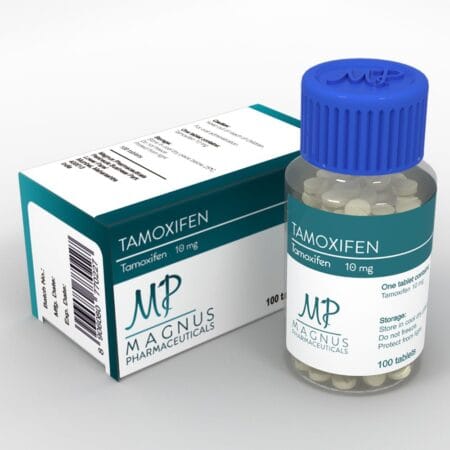
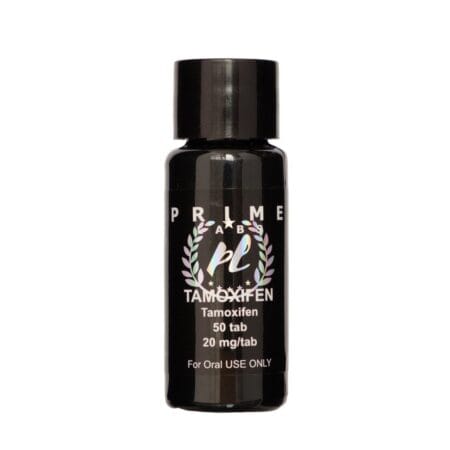
What we carry: Magnus tamoxifen in the 100-tab pack at 10 mg — the same base formulation the PCT community defaults to — and Prime’s 50-tab pack at 10 mg for shorter runs. Other brands or pack sizes can be ordered on request; the lead time depends on the batch availability at the specific supplier.