No. After hydrolysis the active compound is the same: plain testosterone. 100 mg TPP delivers roughly 71 mg of free testosterone after subtracting the ester, 100 mg enanthate delivers about 70 mg — the difference sits inside measurement noise. What differs is the kinetics, not the potency.
Can I mix TPP with enanthate?
Not in the same syringe, but the cycle design often makes sense: TPP in the first two to three weeks as a kickstart, then transition to plain enanthate. Alternatively TPP throughout, if you want more pronounced short depot waves. Anyone already running Sustanon or Omnadren gets TPP automatically along for the ride.
Is one injection per week enough?
Only just. At 300 mg weekly the peak sits around 24 hours in, followed by a drop toward zero after five to six days. To hold steady levels, split the weekly dose into two or three shots of 100 mg every 2–3 days.
How long is TPP detectable after the last shot?
In documented cases TPP has been picked up on LC-MS/MS for about four weeks post last shot — the isotope-ratio IRMS method extends well beyond that. For a tested athlete that means there’s no clean washout window before a competition.
Does TPP make sense for TRT?
In the US and a few other markets TPP gets used off-label as a TRT building block, reducing the injection frequency versus propionate without the peaks of a pure enanthate schedule. It isn’t a mainstream option though — enanthate (Testoviron Depot 250) and undecanoate (Nebido) are the established TRT products in Western practice.
What is the price of Testosterone Phenylpropionate at the steroid shop LabGain?
Steroid shop LabGain offers a wide selection of Testosterone Phenylpropionate in stock.
Buy Testosterone Phenylpropionate at prices ranging from 50 EUR to 50 EUR.
What other steroids for bodybuilding besides Testosterone Phenylpropionate are available for sale?
We offer a great selection of Oral and Injectable steroids, PCT, Fat burners, HGH and SARMs. We're sure that you find the best solution for your needs.
Testosterone Phenylpropionate: the mid-length ester, TPP vs NPP, dosing schedules and WADA status
Call it what it is: testosterone phenylpropionate (TPP for short) is the overlooked cousin in the testosterone-ester family. Sat between fast-releasing propionate and the classic enanthate, the compound rarely gets discussed on its own. Two situations still keep pulling it into the conversation — as one of the four esters inside Sustanon-style blends, and as a standalone alternative for lifters who find propionate too painful and enanthate too sluggish.
A word on the naming trap before we go further: TPP is not NPP. NPP is nandrolone phenylpropionate — same ester, entirely different base compound, with a very different profile (progestogenic, deeper suppression, different aromatisation curve). Reading NPP threads and applying the conclusions to TPP puts you off the pharmacology.
Why lifters actively pick TPP
Three arguments repeat in real-world reports:
Less PIP than straight propionate. The aromatic phenyl ring seems to soften the local tissue reaction in most UGL formulations, the one that gives raw propionate a reputation for days of injection-site pain. Not pain-free — measurably better tolerated in the community consensus.
Steadier serum levels at frequent injections. Injecting every two to three days produces a sawtooth pattern with much flatter peaks than propionate at the same cadence. For users who react sensitively to estradiol swings — nipple irritation, mood volatility, facial water — that can be a genuine reason to prefer TPP.
Fine-tuning without the enanthate lag. When an adjustment becomes necessary (blood pressure creeping up, hematocrit too high, water where it isn’t wanted), TPP responds within days. Enanthate takes one and a half to two weeks to steer in or out.
Community dosing pattern
Experience level
Weekly total
Split
Beginner
200–300 mg
Every 2–3 days
Intermediate
300–500 mg
Every 2 days
Experienced, monitored closely
500–700 mg
Every 2 days
Standard concentration is 100 mg/ml, less commonly 150 mg/ml. Route: intramuscular, most often the glute or the vastus lateralis. Needle 23G–25G at 40–60 mm is enough for most muscle groups. Bringing the oil to body temperature after drawing the shot makes the actual injection easier.
Typical cycle length runs 8 to 12 weeks, occasionally out to 16. PCT usually starts about a week after the last shot — the washout window is shorter than with enanthate.
TPP as a Sustanon building block
In Sustanon 250 — the classic ester blend — testosterone phenylpropionate contributes 60 mg/ml to the overall dose. The four esters:
TPP fills the gap between propionate and isocaproate in this cascade, so the serum level doesn’t cliff-drop after the shot. Elegant on paper. In practice, hitting a flat blood profile still requires injecting Sustanon every three to four days. Anyone shooting it once weekly — the original TRT substitution schedule — gets a hormonal rollercoaster, not a plateau.
Molecule, depot behaviour, release
Chemically it’s the C17β-phenylpropionate ester of testosterone. Molecular formula C28H36O3, molecular weight 420.6 g/mol, CAS 1255-49-8. The ester tail carries an aromatic phenyl ring followed by two propionic carbons — nine carbon atoms in the ester residue in total. That’s two more than enanthate and three times what propionate carries.
In practical terms: higher lipophilicity (log P around 6.45), slower diffusion out of the intramuscular oil depot, longer effective duration. After hydrolysis by serum esterases you have plain testosterone binding the androgen receptor — the rest of the mechanism is identical to every other testosterone preparation.
Half-life and injection cadence
Published values range from about 2.5 to 5 days, with the median across most reference works around 4.5. Effective duration in the clinically relevant range is about 8 days. Those numbers point to a sensible injection interval of two to three days — frequent enough to avoid peaks and troughs, spaced enough to be workable.
For comparison: propionate demands shots every second day, enanthate once (twice at high doses) per week, cypionate weekly. TPP sits precisely in the middle and produces a less volatile serum profile than propionate — without the sluggishness of enanthate.
Ester comparison in numbers
Ester
t½
Injection interval
Legacy brand
Propionate
~0.8 d
1–2 days
Testoviron, Neo-Hombreol
Phenylpropionate
~4–5 d
2–3 days
Testolent, Sustanon (component)
Enanthate
~4–7 d
1×/week
Testoviron Depot
Cypionate
~8–12 d
1×/week
Depo-Testosterone
The ester never changes the intrinsic anabolic or androgenic action. It changes only the release speed out of the depot, and therefore how often you have to pick up a needle.
Side effects: the usual suspects
Since the molecule released is plain testosterone, the side-effect profile lines up with any supraphysiological testosterone use. Most common reports:
Acne, seborrhoea, more often on the face and upper back
Climbing hematocrit — a periodic phlebotomy above 52% isn’t a luxury
Weight gain, water retention, occasionally blood pressure creeping up
Prostate enlargement with a rising PSA
Aromatisation to estradiol — gyno risk in predisposed users
Suppression of endogenous testosterone production (LH, FSH near zero on cycle)
Cardiovascular numbers on average: systolic blood pressure up 5–15 mmHg, HDL down 20–40%, LDL variable. Most of the drift reverses after cessation — but only most, and the red-cell mass in particular needs months to normalise.
Specific to TPP: injection pain is milder than with propionate, but not zero. Users sometimes report an “afterburn” at the injection site around 12–24 hours later, which needle size and oil temperature don’t seem to affect. The likely cause sits in the carrier and the ester-specific metabolites.
Legal status and WADA
Testosterone is a Schedule III controlled substance in the US, Class C in the UK, prescription-only across the EU. Testosterone phenylpropionate as a standalone was never widely approved in Western retail and shows up in the licensed catalogue almost exclusively as a Sustanon component — availability of which is patchy in several markets right now. Anyone sourcing TPP as a pure product will land at UGL suppliers, with the quality problems that come with it.
WADA Prohibited List 2026, S1.1 (Anabolic Agents), banned at all times. Detection via LC-MS/MS with testosterone-metabolite tracking, backed by IRMS when the panel needs to rule out endogenous origin. For a tested athlete — competitive sport, Olympic squad, government-funded elite tier — TPP is a guaranteed rule violation.
Where TPP actually comes from
Legal route: import through an international pharmacy against a US or UK physician’s prescription, either as Sustanon or via off-label prescribing. Foreign prescriptions are not recognised in the West. The majority of the actual market runs through UGLs in Eastern Europe, the Balkans and the Far East, where quality varies significantly. Without consistent oil colour, without a clean batch number, without an independent-lab analysis certificate, every use is a blind bet — even at the prices that make it look cheaper than the regulated import.
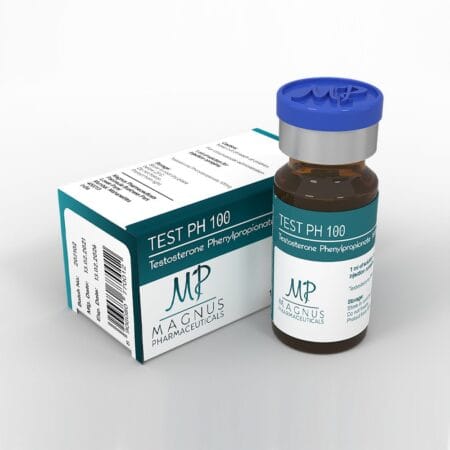
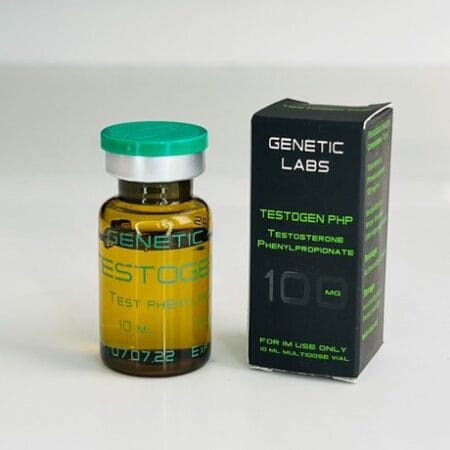
What we carry: TPP from Magnus (Testosterone Phenylpropionate 10 ml / 100 mg/ml) and Testogen PHP from Genetic Labs (10 ml / 100 mg/ml). Other brands or concentrations can be ordered on request — availability depends on the specific manufacturer.